t.test() compare two sets of observations of 50 measures. The two sets should be normally distributed but the first one is centered in 0, and the second one in 1. Their standard deviations are the same:  .
.
power.t.test() function identify how many observations would be needed theoretically in order to reach this statistical power of 50%.
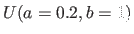 , and the other from
 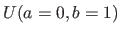 . Repeat that experiment 100 times but keeping as the reference distribution (not changing) whereas the 200 measurements of the first uniform have to be randomly drawn each time. How many times is the null hypothesis rejected (with the traditional threshold of 0.05)?
PlantGrowth and compare adequately (justify the choice of test) the biomasses in each group.
CO2 and compare adequately (justify the choice of test) the uptake in CO2 in between plants having been chilled and the non-chilled ones.